How GAMT™ Started
I've always had a terrible memory. This is how I worked around it.
I'm Karthikeyan Srinivasan. I'm an anaesthetist, and I've spent my entire career figuring out how to remember things — because my brain simply doesn't do it naturally. GAMT™ is the technique I built for myself. It worked so well that I thought others might find it useful too.
What Changed
Medical school broke my old system. The volume of information was impossible to revise six times over. My classmates could read Harrison's Textbook of Medicine once and recall it for exams. I couldn't. So I started drawing.
How it evolved
I got into Madras Medical College — one of the best in Tamil Nadu. But the amount of information exploded. There was no way to just revise everything repeatedly anymore. I tried mnemonics, memory palaces, peg systems — they worked for small bits of information, but not at the scale I needed.
Then I started drawing simple diagrams. Not fancy ones — just quick sketches that captured how things connected. Something about seeing the information spatially made it stick in a way that reading never did. Over a few years, this evolved into a proper system. That system became GAMT™.
My early GAMT™s from 2003. You can see the technique evolving — the first one is crowded, the later ones are clearer:
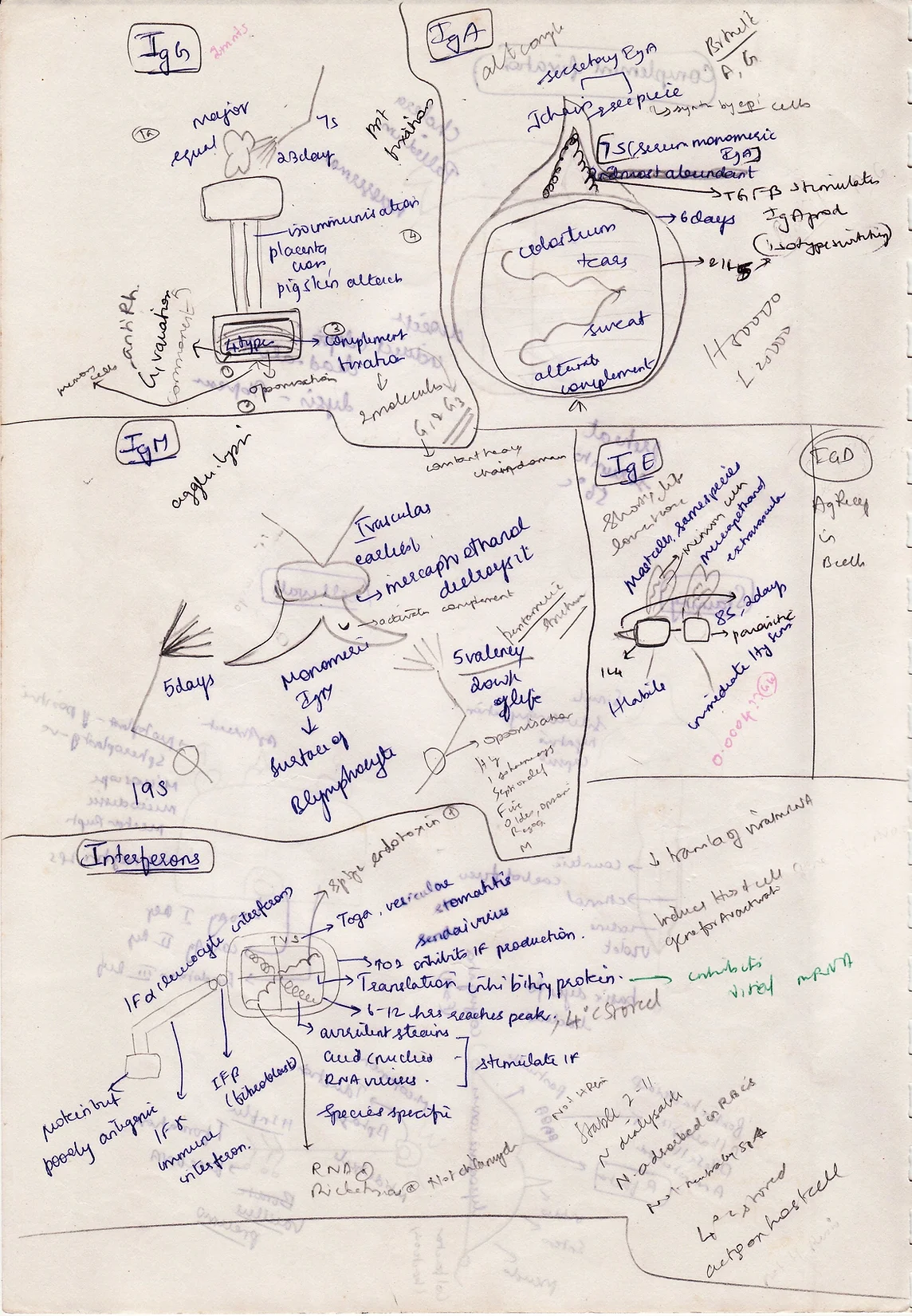
Immunoglobulins (2003)
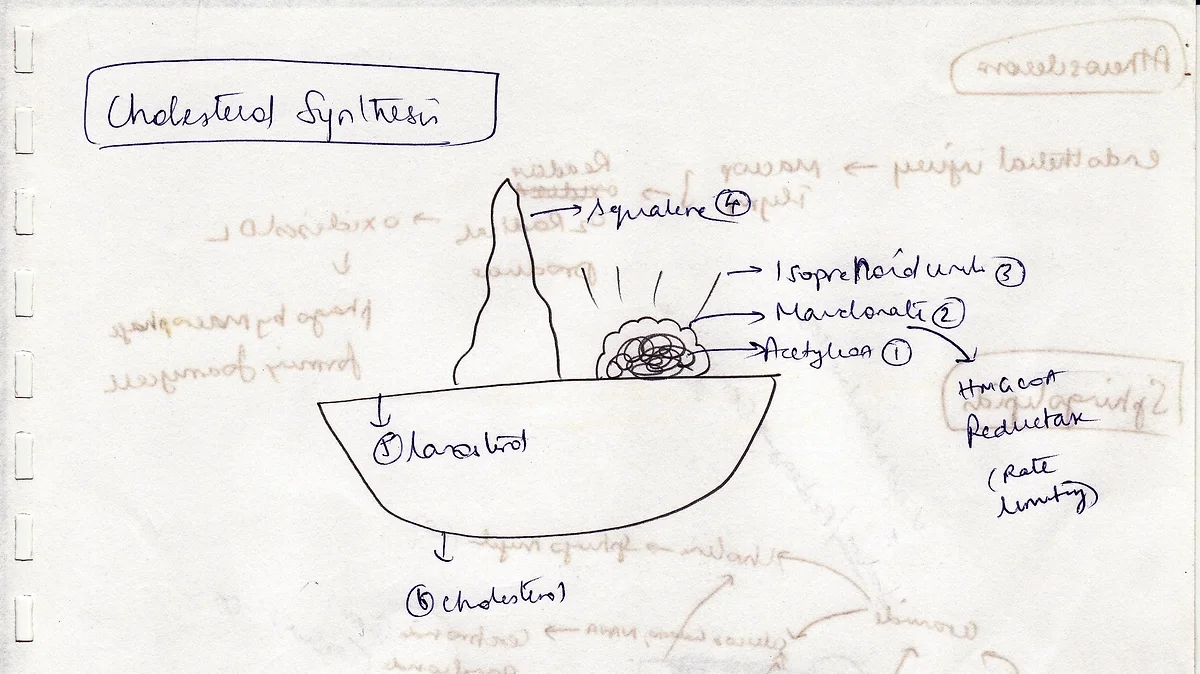
Cholesterol Synthesis (2003)
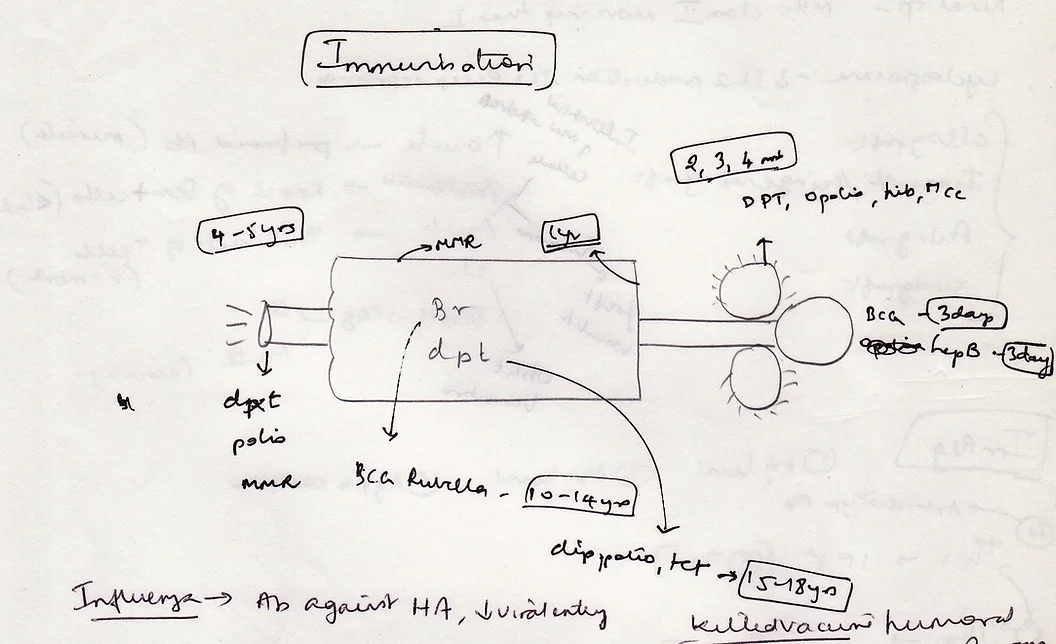
Vaccination (2009)
Did It Actually Work?
Yes. I passed every major medical exam on my first attempt — including ones with 40%+ failure rates among qualified doctors. I scored 99th percentile on all three scored USMLE steps. Not because I suddenly got a better memory. Because GAMT™ made the memory part less important.
Full list of exams
Here's what GAMT™ helped me get through — all first attempt:
- FCARCSI — Irish anaesthesia fellowship (primary + final)
- FRCA — UK anaesthesia fellowship (primary + final)
- USMLE — All 4 steps, 99th percentile on Steps 1, 2 CK, and 3
- MRCPI — Irish medical membership (a different specialty entirely)
- PhD — University College Cork (2015)
I'm not listing these to brag. I'm listing them because the person who took those exams is the same person who, at 12, was convinced he could never be a doctor. The only thing that changed was the technique.
A more recent GAMT™ — the technique has come a long way from those 2003 sketches:
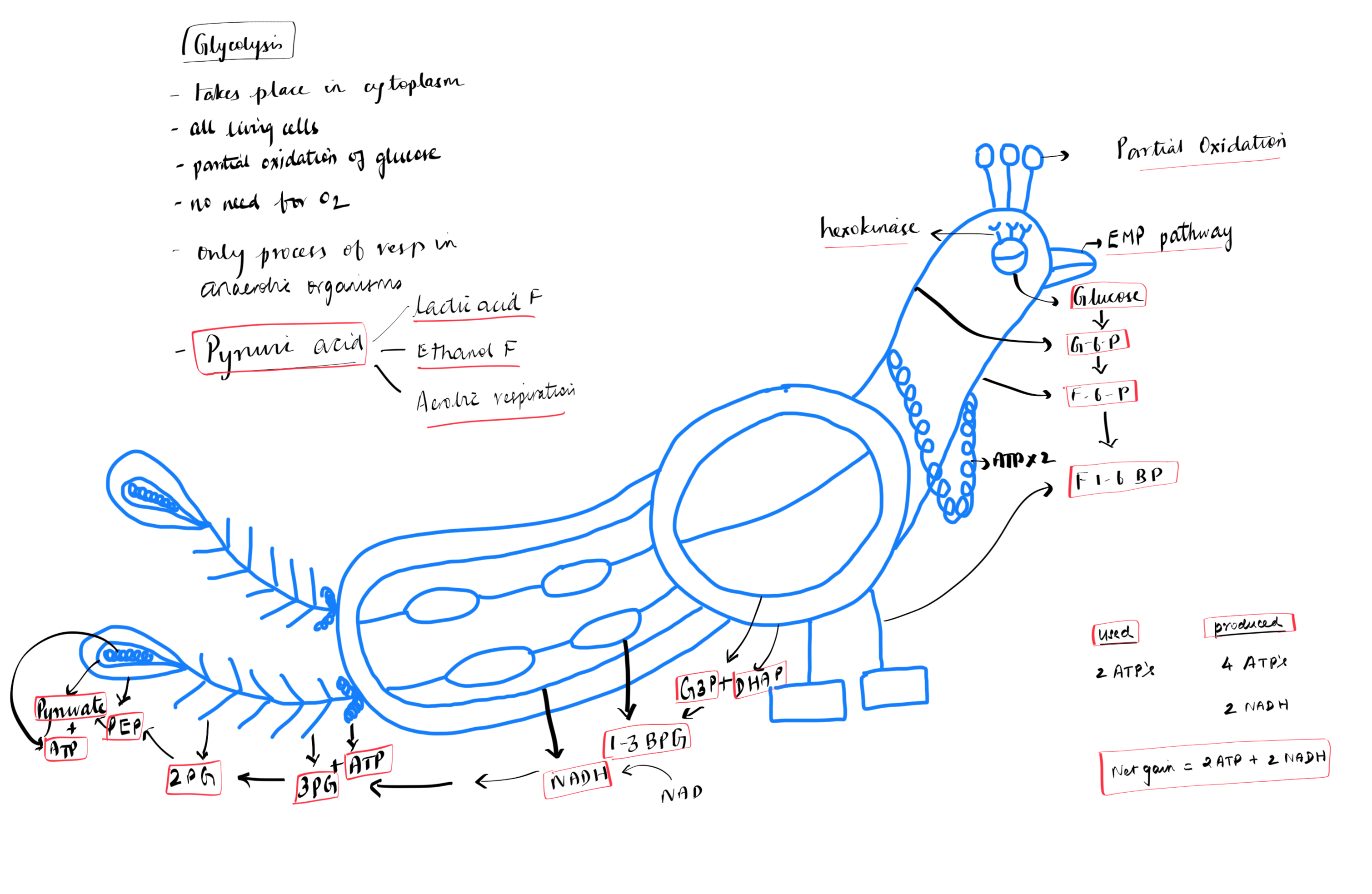
Glycolysis